
Skid Row Conversations
Skid Row Conversations is an interpretation of the culture, character, and chaos from within a section of Downtown LA, known as Skid Row. I spent the better part of 3 years walking around and through Skid Row gathering. One of the largest populations of homeless people in the United States estimated close to 5000 residents Skid Row has been around since the 1930"s. Walking only a few blocks from the glitter of Downtown Los Angeles, a different world entirely. Nothing prepares you for the reality of being there in person — the immediacy, the weight, the humanity.
Rows of tents stretch across entire blocks, forming makeshift neighborhoods a home of their own. Sitting outside their shelters talking, repairing belongings, trying maybe to find a moment of calm in a place that rarely offers it. Some greeted me with nods or small smiles. Others were deep in their own thoughts or navigating struggles that were plainly visible. Amid the noise of traffic and city life, there was a surprising quiet, a kind of stillness if there is such a thing.
What struck me most was how close all of this sits to the rest of Los Angeles brand new luxury apartments, restaurants, and high-rise offices. The divide isn’t miles — it’s feet. That contrast alone is a story.
But there is no ignoring the suffering. Mental-health challenges, addiction, untreated illness, lost jobs, broken systems — each person has a story that brought them here and there. Many want help but have been failed by the long, complicated maze of services and waiting lists. Skid Row isn’t the result of individual choices alone; it’s the result of decades of policy decisions, economic pressures, and the widening cracks that people fall through.
Walking- I felt a mix of sadness and clarity if only I could help. It’s easy to look at homelessness from a distance and form quick opinions. It’s harder — and more important — to see the people behind it. My walks on Skid Row didn’t give me all the answers, but it did give me a deeper understanding: these are human beings trying to survive in conditions none of us would want to face.
We often talk about homelessness in numbers, but the truth is much simpler and more urgent: every person on Skid Row is someone who once had hopes and plans. As a painter, I’ve spent years trying to capture emotion — in the bend of light, in the turbulence of color on Plexi-glass. Some faces reminded me of portraits I’ve painted: expressions layered with exhaustion, resilience, and something deeper that no photograph can quite hold. I held photographs which are depicted here in my work. Where chaos and color collide, a habit followed me through Skid Row. I found myself seeing not just tents but composition; not just noise but rhythm; not just hardship but stories. I left with a strange certainty that what I saw would eventually find its way into my work — perhaps in a portrait, perhaps in an abstract — because the experience changed the way I see people, and the way I see color.
DTLA Life Magazine, Art Spotlight Feature
Bill Sherwood: “Skid Row Conversations”
By Hilary Chapman
While the majority of us have been asked to shelter in place here in Los Angeles, Bill Sherwood’s solo exhibition, Skid Row Conversations, currently at GDCA Gallery highlights some of the LA residents who are unable to find refuge. Sherwood’s brightly colored and expressive mixed media paintings foil the complex and difficult subject matter.
As an LA implant, Sherwood has developed an ongoing interest in Downtown Los Angeles as well as the history of Skid Row from its beginnings in the late 19th century as “Hobo Corner,” its official establishment in the 1970s, and its evolution into the community it is today.
By his own admission Sherwood does not intend to be political with this series, but rather explore themes of identity, existence, and the human experience. In this exhibition, he gives a voice to the diverse individuals of Skid Row with their own personal stories like Bullet Dancer who has been shot 5 times and is lucky to be alive or Jumping Joy who has lived in Skid Row for 15 years. Sherwood plays with abstract and figurative representations, color, and emotion in these visual expressions of his experiences and conversations on Skid Row. In his painting Weeping Woman, Sherwood depicts the outline of the figure holding out a cup begging for spare change. We can see the blue tears trickling down her body.
Contrastingly in Crying Man, Sherwood creates abstracted shapes to illustrate this interaction between himself and the crying resident. Sherwood points out “you can get emotional about it, but it’s not your moment in time, it’s theirs.” In two seemingly similar sightings, he compares the difference in interpretation to the gendered disparities in Skid Row and the disproportion of men to women in the community. Sherwood explained how this man’s story really resonated with him as he cried out in frustration about the successes and ultimately failures in life.
Another reflection of his experience, Herban Garden at first glance may seem to depict an innocent sun-soaked garden of flowers or vegetables, but instead actually represents a garden of cannabis with the hint of urine in the air. Sherwood visualized “what I thought, what I smelled, and what I experienced.” These vibrant and colorful depictions of life on Skid Row can seem paradoxical, much like the community itself. Sherwood’s use of color and gesture in his works convey a range of emotions that encourage the viewer to think deeper, while simultaneously creating a timeless quality.

A Skid Row Conversation- # 1 -what started it all!

NOISE

WEEPING WOMAN

CONVERSATION IN COLOR

CRYING MAN

BLOCK PARTY

CURVING

BULLET DANCER

THE GRIDLOCK

BLUE DANCER

HOBO HEAVEN

SKID ROW 2123

HERBAN GARDEN

SATURDAY MORNING

JUMPING JOY

Skid Row Conversation Series by Bill Sherwood. " SINK" www.sherwoodart.com 213-840-7651 billyart1023@gmail.com

UN-EVEN

TOWN CENTER

4.132 SQ MILES - area of Skid Row
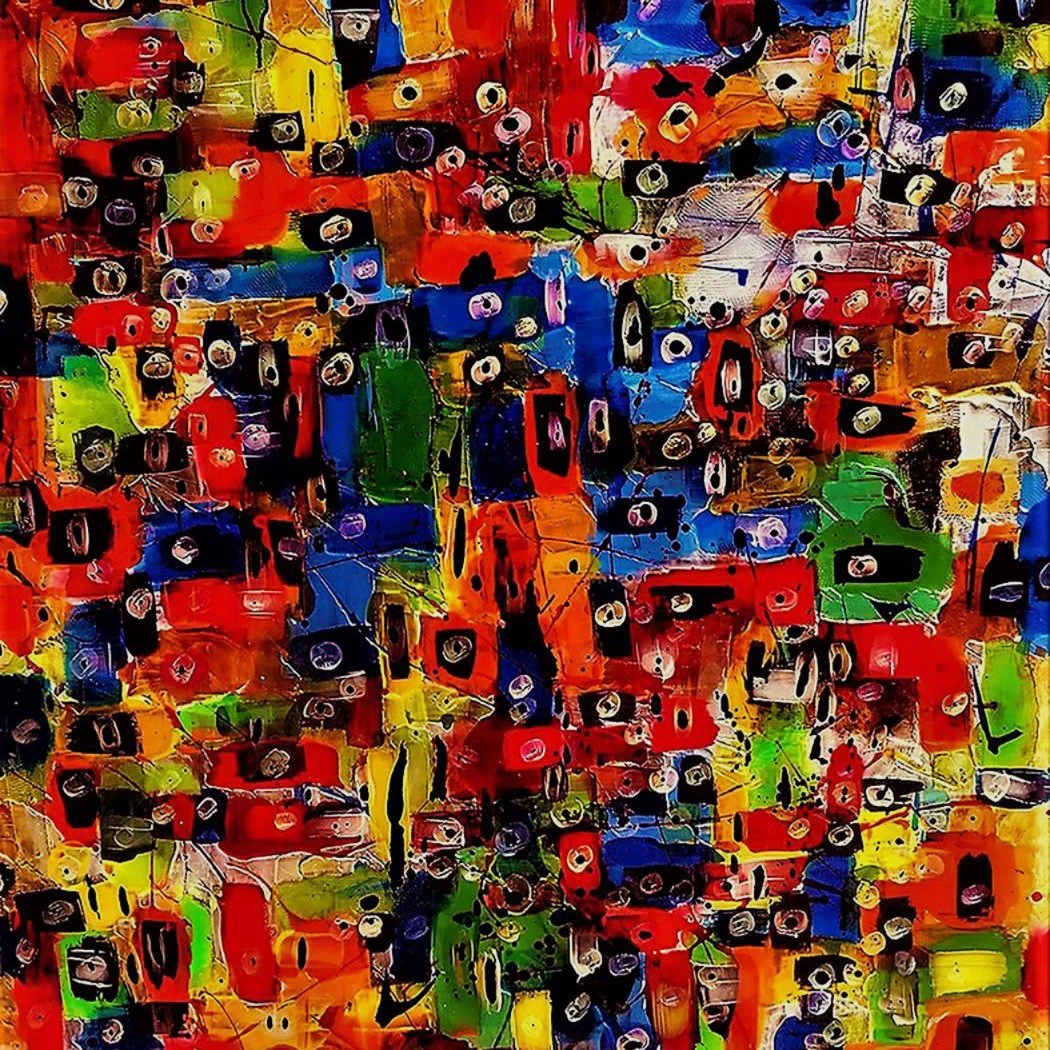
YEARBOOK

THE DANCE

HUG
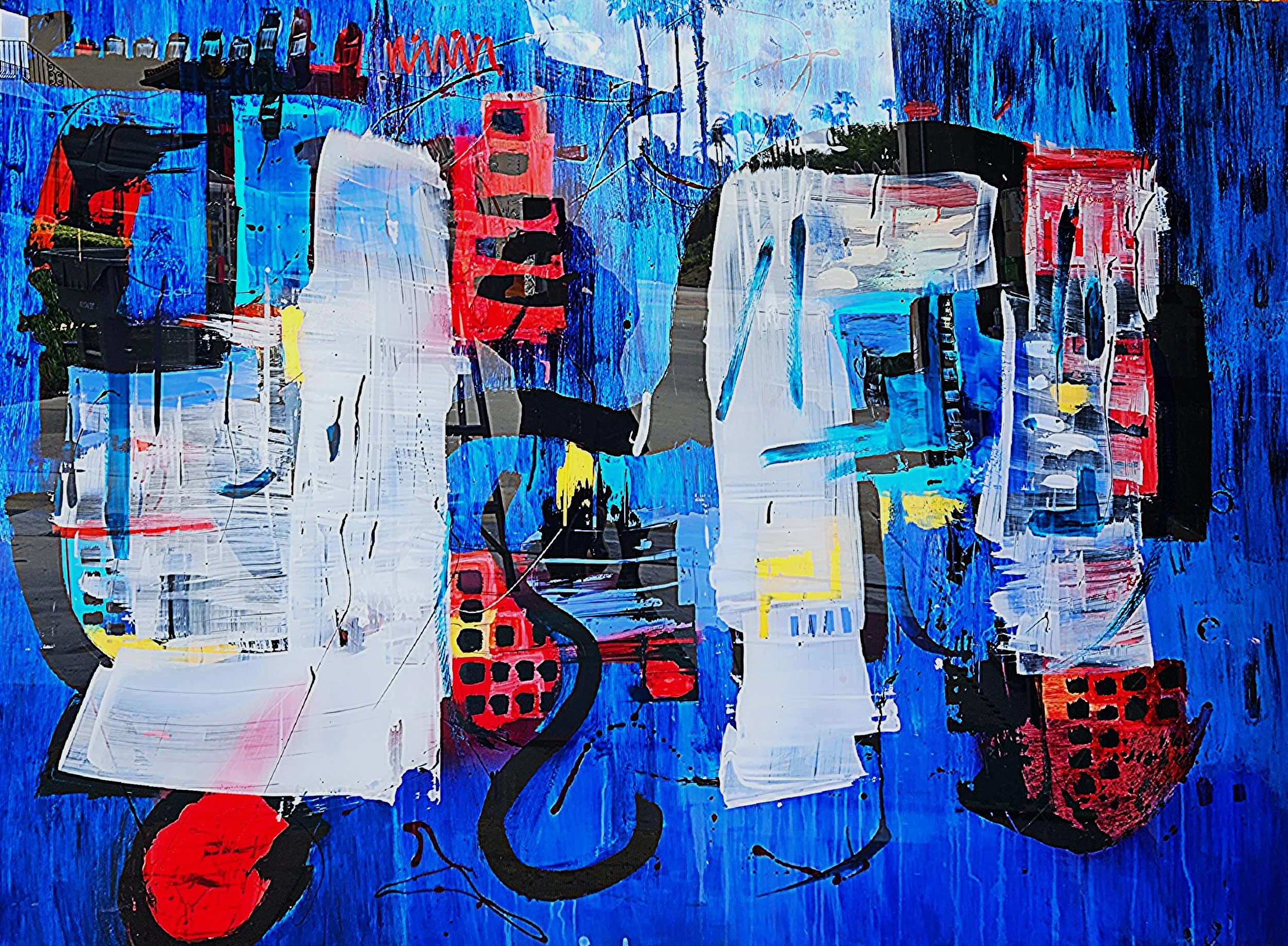
2 PLACES

My Friend Albert

Scarlet Alley - San Julien Street